

A study of 51 stakeholders in Greece and Malta reveals what stands between promising food technology and everyday use.
Every year, citrus processing leaves behind huge amounts of peel and pulp. New gentle, non-thermal technologies can turn these leftovers into valuable ingredients while using less energy. Yet few companies have adopted them so far. A newly published study in Applied Food Research asks a question that is often overlooked: what do the people along the food chain actually think about these technologies?
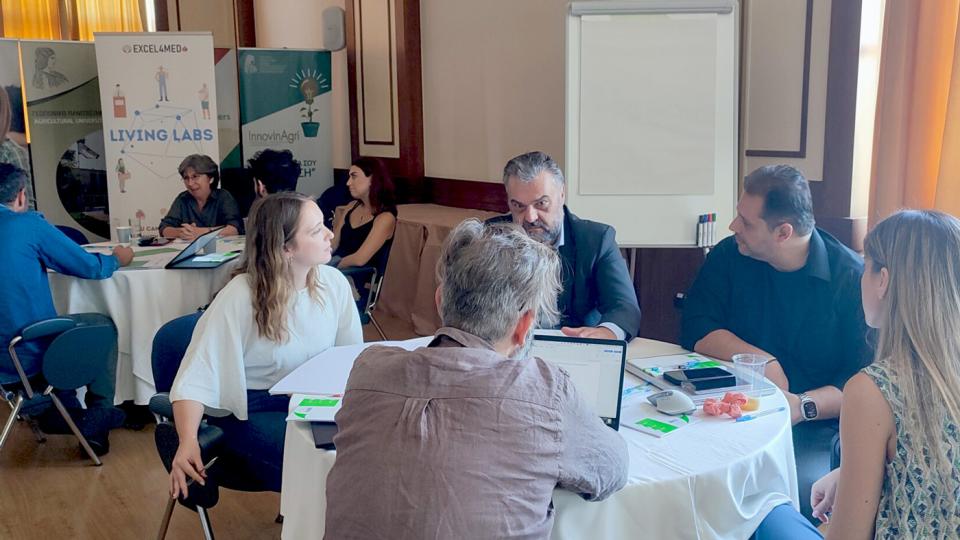
The study, carried out within the EXCEL4MED project, gathered the views of 51 people from across the Mediterranean food innovation ecosystem: 27 in Greece and 24 in Malta. Participants included farmers, food businesses, researchers and public institutions. The study focused on three technologies: Pulsed Electric Fields, High-Intensity Ultrasound and Hydrodynamic Cavitation.
In each country, the analysis revealed three distinct perspectives, so there is no single “stakeholder opinion”. Stakeholders in Greece were generally positive about the environmental and social benefits of the technologies. In Malta, participants gave more weight to the economic and environmental benefits.
In both countries, economic feasibility was the central concern. Stakeholders want to know whether the technologies can cut costs, raise producers' incomes and open new market opportunities. Adoption also depends on whether a technology fits existing ways of working, on the governance conditions around it, on how well people know it, and on whether its promised benefits seem credible.
"Good technology does not adopt itself. People decide whether it is worth the investment, whether the rules are clear, and whether they trust it. Listening to them early makes it far more likely that these solutions leave the lab and reach the market."
The authors conclude that support for these technologies should go beyond technical information.
They recommend:
• Transparent evidence on costs and benefits;
• Financial support that lowers the risk of the initial investment, especially for smaller producers and processors;
• Clear guidance on EU Novel Food rules for new ingredients extracted from citrus by-products;
• Demonstration activities tailored to different groups, so that farmers, processors, researchers, public bodies and consumers can see the benefits for themselves;
• Support schemes adapted to national contexts, because what works for a large citrus sector may not suit a small island economy like Malta.
Read the scientific publication:
Bayraktar, A., Prosperi, P., Giannoglou, M., Katsaros, G., & Kleftodimos, G. (2026). Stakeholder perceptions and barriers to the adoption of novel non-thermal food processing technologies for citrus waste valorization: A multi-actor study in Greece and Malta. Applied Food Research, Volume 6, Issue 2, 2026, 102650, ISSN 2772-5022, https://doi.org/10.1016/j.afres.2026.102650.
Laura Fortea
Smart Agro Hub
laura@smartagrohub.gr
This article is part of the EXCEL4MED project, funded by Horizon Europe, the European Union's research and innovation programme.
EXCEL4MED aims to establish an Excellence Hub in Mediterranean fruit supply chains and accelerate the transition towards more sustainable, resilient and innovative food systems.
Project website: https://excel4med.eu/