Participatory Climate Research
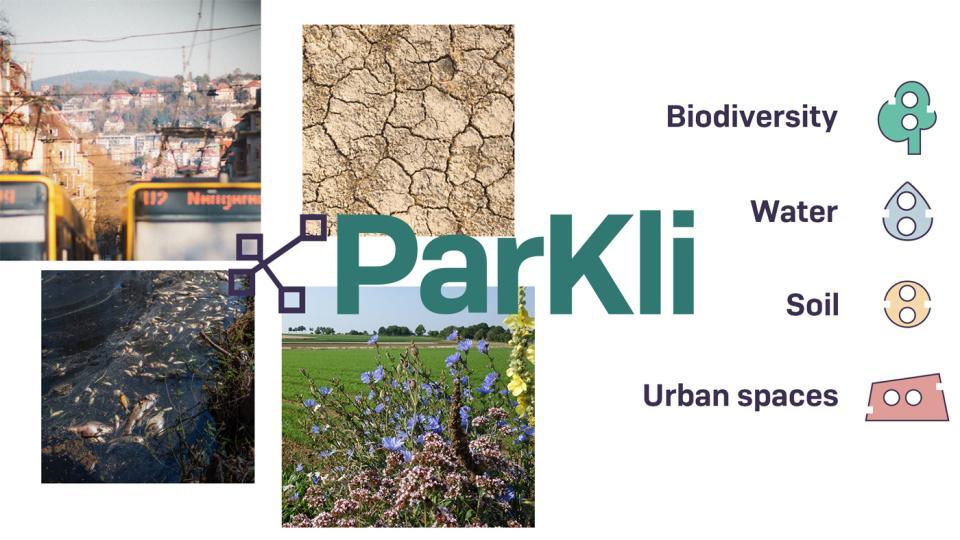
Image from ParKli website, licensed under CC BY-SA 4.0
Why does climate change need to be understood locally?
Rising temperatures, prolonged droughts, extreme rainfall and biodiversity loss are reshaping ecosystems, water resources and quality of life, but their effects differ sharply from one place to the next. Effective adaptation depends on environmental data that reflects these local conditions, not just national or continental averages.
ParKli, short for Participatory Climate Research, investigates how existing citizen science apps and environmental sensors can be combined with public engagement to close that gap. Its guiding question: how can applications and data sources from environmental informatics be integrated with citizen participation to develop local climate adaptation measures?
How does ParKli combine citizen science and environmental monitoring?
The project brings together scientists, citizens, schools and local organisations across southern Germany to collect and analyse environmental data in four areas: biodiversity, water, urban green spaces and soil.
Participants submit observations through established citizen science platforms: iNaturalist for biodiversity, EyeOnWater for water quality and GreenspaceHack for urban green spaces. Secchi disk readings and dedicated environmental sensors add additional and continuous water body monitoring. All of this feeds into the ParKli platform, where data on a given location can be explored and analysed across sources.
Citizens are not limited to data collection. They help define local research questions, test new technologies and discuss what adaptation measures could follow from the findings.
What does ParKli aim to achieve?
The project's objectives are to build a reliable environmental database through participatory monitoring of biodiversity, water, soil and urban green spaces; involve citizens directly in scientific research and strengthen collaboration between researchers and local communities; develop local early-warning approaches for identifying environmental change and climate-related risk; support evidence-based adaptation measures developed with local stakeholders; and establish a digital platform that outlasts the project and supports future citizen science work.
How does ParKli put Open Science into practice?
Open Science underpins the project at every level. ParKli draws on citizen science data that international communities have built up over many years through platforms like iNaturalist and EyeOnWater, and combines it with its own sensor measurements, so the platform both reuses existing knowledge and generates new, locally specific insight.
The project also develops open-source hardware and software of its own: a monitoring buoy for continuous water body measurement and the ParKli EDU-KIT, a versatile sensor platform schools and research institutions can deploy and adapt for their own environmental monitoring.
A third strand is open educational resources (OER available in German). Freely available teaching materials help schools integrate citizen science into lessons, so pupils collect real environmental data themselves while learning how scientific research works.
Beyond the project's duration, the open-access platform is designed to let other initiatives reuse its tools, data and experience for their own citizen science work, extending its value past the original funding period.
What impact does ParKli have for science and society?
For citizens, ParKli offers a direct route into environmental research and a clearer picture of how climate change is playing out where they live. Schools gain practical, data-driven environmental education. Researchers get access to combined citizen and sensor data for studying environmental change across locations and time. Local authorities and decision-makers gain more accessible environmental information to support evidence-based planning.
ParKli ran as a funded research project from July 2021 to July 2024. Its open platform, educational resources and monitoring technologies continue to support citizen science and climate adaptation work beyond that period.